【PR】
ファクタリングとは売掛債権を売却することで支払期日より早く現金化することです。近年資金調達として非常人気があります。
その理由は以下のメリットがあるからです。
・資金調達がとにかく早い(基本的に即日可能)
・自社の業績と関係なく資金調達できる
・取引先にバレない(2社間のみ)
・借り入れにならない
・信用情報に影響がない
・取引先が倒産してもリスクを負わない(ノンリコース契約)
逆にデメリットとして注意すべきなのは、ファクタリング会社の中に、「3社間ファクタリング」を行うところがあり、その場合は取引先に利用がばれてしまうという事です。
そのため当サイトでは、「2社間ファクタリング」で「ノンリコース契約」を行っているファクタリング会社のみをご紹介します。
【注目情報】
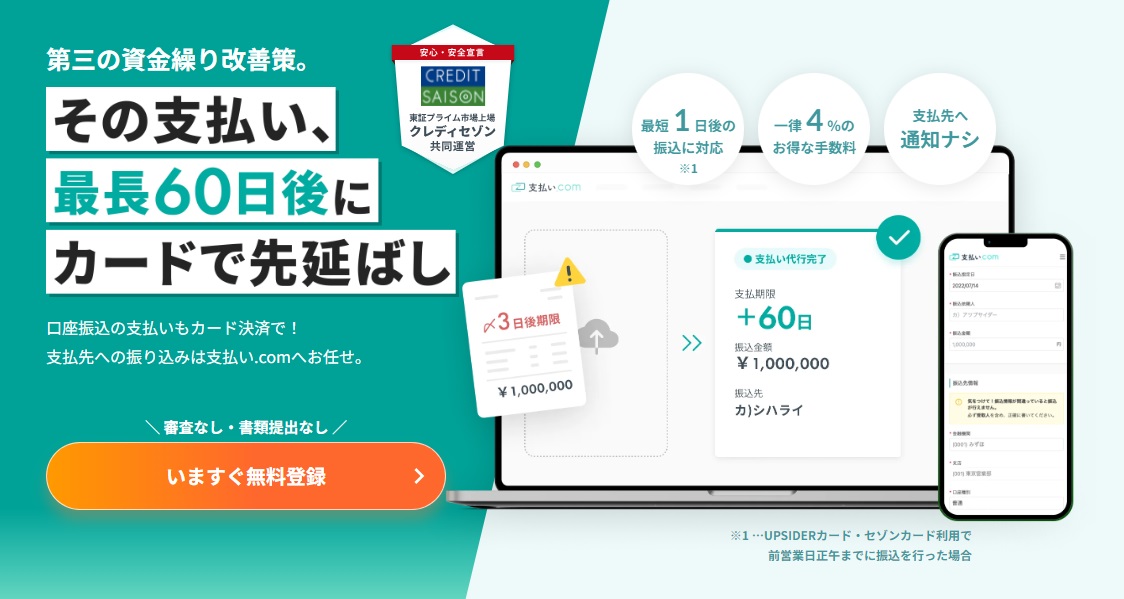
ファクタリングより更に新しいサービスとして、支払いをカード払いで遅らせる「後払い」サービスが非常に好評です。
簡単な手続きで60日支払いを遅らせられるうえに、手数料も4%とお手軽です。もちろん、取引先にはバレないので安心です。
ファクタリングで入金を早め、支払いドットコムで支払いを遅らせれば、かなりの資金猶予が生まれるのでおすすめとなります。
※※1分で登録完了※※
審査なしで支払い先送り
おすすめファクタリング会社
おすすめのファクタリング会社ですべて、「2社間ファクタリング」で「ノンリコース契約」となります。
| 買取手数料 | 入金スピード | 買取可能額 | 審査 | 備考 | |
| QuQuMo | 1.0%~14.8% | 2時間 | 無制限 | オンライン完結 | 柔軟な対応で人気のファクタリング会社です。当サイトでも1番人気です。 |
| ビートレーディング | 2.0%~12.0% | 2時間 | 無制限 | オンライン完結が可能 | 30分以内に審査結果がわかります。 |
| みんなのファクタリング | 7.0%~ | 1時間 | 300円迄 | オンライン完結 | 土日祝日でも対応可 |
QuQuMo(ククモ)
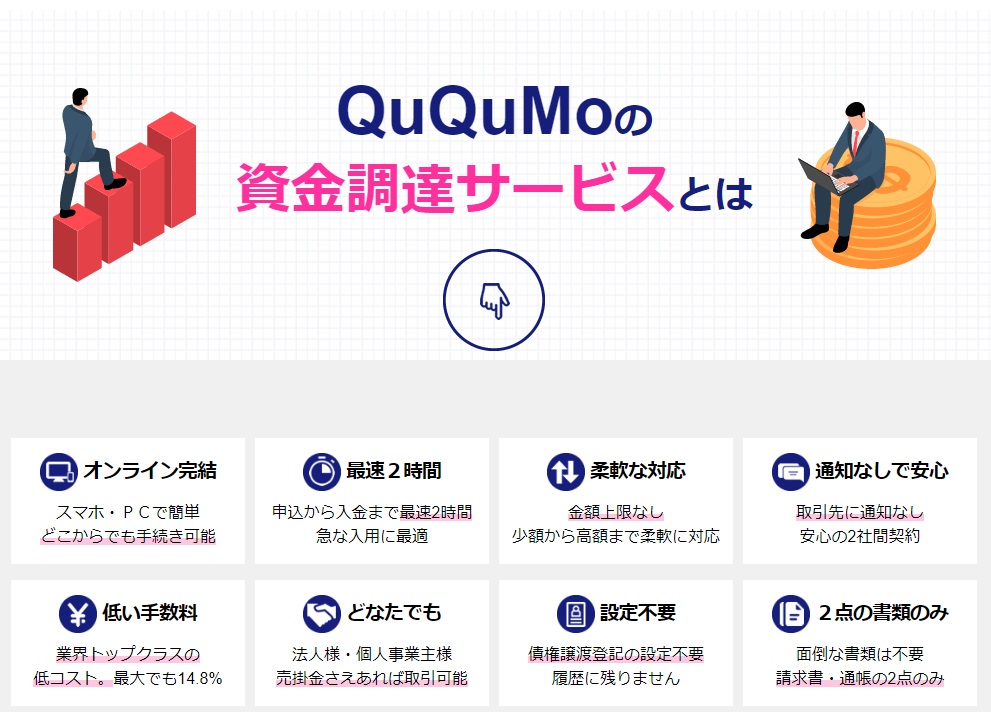
ククモはファクタリングを初めて利用する方にとって最もおすすめするファクタリング会社となります。
・来店不要
・入金まで最速2時間
・手数料1%~
・書類は請求書・通帳の2点のみ
・上限金額なし
とにかく申し込みの手間が少なく、入金までが早い事、そのうえ手数料が業界最低水準なこと。お勧めする理由はすべてそろっているでしょう。
基本的にククモを利用して間違いないと思います。
簡易審査で即曰入金
ビートレーディング
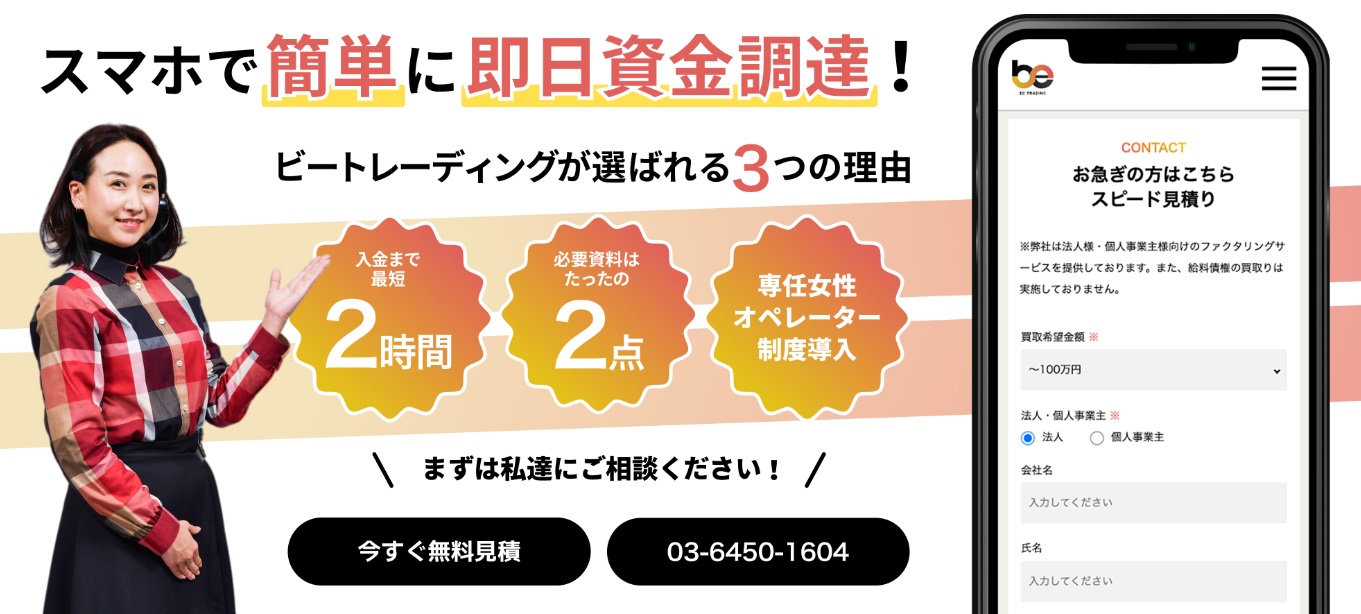
ビートレーディングも文句なしのおすすめファクタリング会社です。ククモと比較しても基本的に遜色はありません。
強いて言えば、最低手数料が2.0%~になっていることくらいでしょう。
ですから、2社間ファクタリングを使うなら、ククモかビートレーディングを選ぶ方が大半です。
みんなのファクタリング
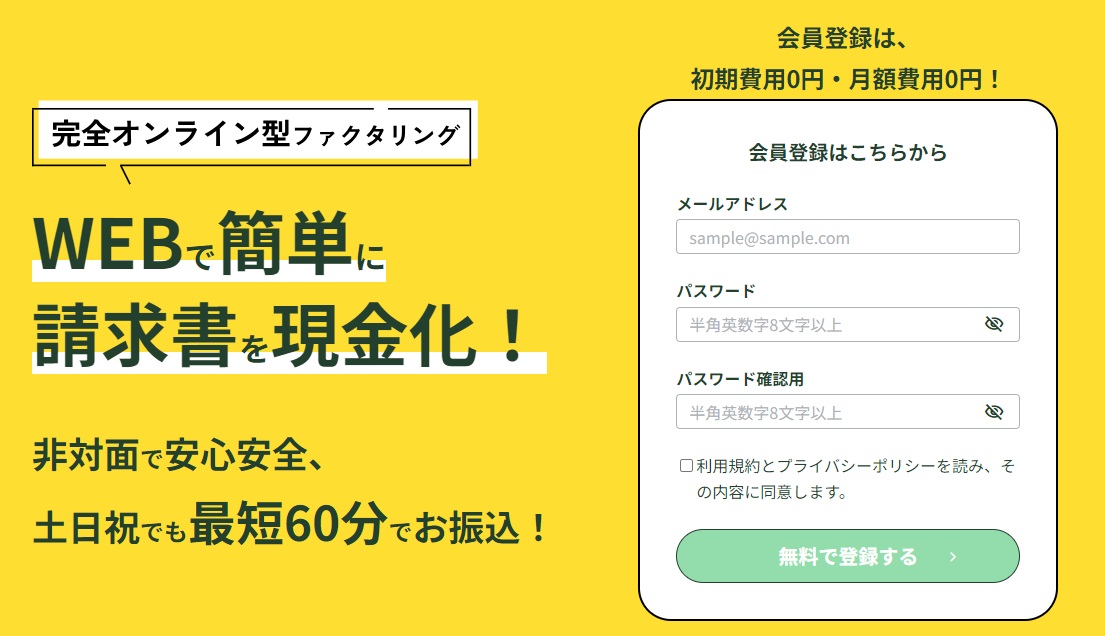
みんなのファクタリングは上記二つに比べると若干劣る部分があります。
・手数料7%~
・限度額300万
これらは、上記2社と比べるとマイナス点となります。
ただし、みんなのファクタリングは土日祝日も営業しており、振込も可能です。
そのため、どうしても至急で土日祝日で処理しなければいけない場合の駆け込み寺的な扱いとなります。
ファクタリングのメリット
ファクタリングには企業に対していくつかのメリットがあります。以下はその主なものです。
即時の資金調達: ファクタリングは、未払いの請求書や債権を売却することで、即座に現金を得る手段です。企業は支払いを待つ必要がなくなり、資金調達のニーズを迅速に満たすことができます。
流動性の向上: ファクタリングにより、企業は未収入の流動性を向上させることができます。これにより、経営資金不足や急な支出に対応できます。
クレジットリスクの軽減: ファクタリングを利用することで、債権の回収リスクを負うのはファクタリング会社であるため、企業は債権に関するクレジットリスクから解放されます。
経営資金の柔軟な運用: ファクタリングにより企業は、請求書の売却によって得られた資金を自由に経営資金に活用できます。これにより、生産拡大や新規プロジェクトの開始などに柔軟に資金を充てることができます。
売掛金の管理の簡素化: 債権を売却することで、企業は売掛金の管理や回収業務から解放され、その手間やコストを削減できます。ファクタリング会社が回収業務を担当するため、企業は他の業務に専念できます。
信用向上: ファクタリングは企業の財務状況を改善することができ、信用力向上に寄与することがあります。資金調達手段としての信用度も向上する可能性があります。
ただし、利用する際には手数料や契約条件なども考慮する必要があります。また、業種や企業の状況によっては他の資金調達手段との比較が重要です。
ファクタリング 法人と個人の違い
ファクタリングは通常、法人が取引の対象となることが一般的です。ただし、一部のファクタリング会社は法人以外にも特定の条件を満たす個人に対してもサービスを提供している場合がありますが、これは一般的ではありません。以下は、個人と法人がファクタリングに関する主な違いです。
法的実体としての資格: ファクタリングは通常、法人が行うビジネス取引の一環として位置づけられています。法人は法的な実体としての資格を持っており、債権や請求書の売却に関する契約を締結することができます。一方で、個人は法人ではないため、ファクタリングの取引は難しい場合があります。
クレジットリスク: ファクタリングは通常、債権のクレジットリスクを取引主体(法人)が負います。法人は信用調査や財務状況の提供などが求められ、これに基づいて審査が行われます。一方で、個人に対してはクレジットリスクを判断するのが難しい場合があります。
法的契約条件: ファクタリング契約は一般的に法的な文書であり、法人としての契約条件が規定されています。個人の場合、法的な制約や契約条件が異なり、ファクタリングの実施が難しいことがあります。
規模と取引の特性: ファクタリングは一般的に大口の取引や法人間のビジネスに適しています。個人の場合、取引の規模や特性が法人と比較して小規模かつ異なる傾向があるため、ファクタリングの利用が難しいことがあります。
個人がファクタリングを利用する場合、通常は特殊なケースや条件が絡む可能性があります。一般的なビジネス取引においては、法人がファクタリングの主な利用者となります。
ファクタリングはやばいの?
ファクタリング自体は、企業が未払いの請求書や債権を金融機関や専門の会社に売却し、即座に現金を手に入れる手段の一つです。ファクタリングを利用することで、企業は資金調達のニーズを迅速に満たすことができ、流動性を向上させることが可能です。一方で、いくつかの注意点やリスクも存在します。
手数料とコスト: ファクタリングを利用する際には、手数料や契約条件に注意する必要があります。手数料が高い場合や契約条件が不利な場合、コストが増加する可能性があります。
クレジットリスクの転嫁: ファクタリングは債権を売却することでクレジットリスクを転嫁する仕組みです。しかし、ファクタリング会社が債権の回収に失敗する場合には、元の企業がリスクを負う可能性があります。
長期的なコスト: 短期的に資金調達ができる一方で、長期的には手数料や費用が蓄積する可能性があります。ファクタリングは一時的な資金調達手段として利用されるべきであり、継続的に使用する場合は検討が必要です。
取引関係の変化: 債権の売却により、ファクタリング会社が取引先の顧客との関係を持つことになります。この変化が企業の顧客との信頼関係に影響を与える可能性があります。
契約条件の確認: ファクタリング契約は、手数料や契約期間、取引条件などが含まれます。契約前にこれらの条件を十分に理解し、将来的な影響を考慮することが重要です。
したがって、ファクタリングを利用する際には注意深く契約条件を確認し、自社のニーズと短期的な利益とのバランスを検討することが重要です。特に、信頼性のあるファクタリング会社を選び、契約内容をよく理解した上で取引を進めることが重要です。
ファクタリングのまとめ
ファクタリングはあくまで債権を売却しているだけなので借入ではありません。
スピーディーに資金調達できるので、1社少額でも良いので利用して登録しておくと、本当に困ったときにスムーズなので便利です。
同時に、支払いの後払い「支払いドットコム」も同じように登録しておくことをおすすめします。
この二つを準備しておけば、資金に関する悩みが減るので、経営に集中できます。
「今月ギリギリだな・・・ショートしたらどうしよう」
この様な状況が続くことは良くないのは明白です。
「今月はギリギリだな・・・でも、だめならカード後払いにするか!」
この余裕がとても大切なのです。
確定してない不安で悩むことは本当に無駄なことです。賢く最新サービスを利用しましょう。